

A Website Is Not Marketing (And Why That Matters)
You launched a brand-new website.
It looks professional. The design is clean. The photos are sharp. The messaging feels solid.
Then a few days go by…
And you start wondering:
“Why aren’t we getting leads yet?”
Here’s the reality:
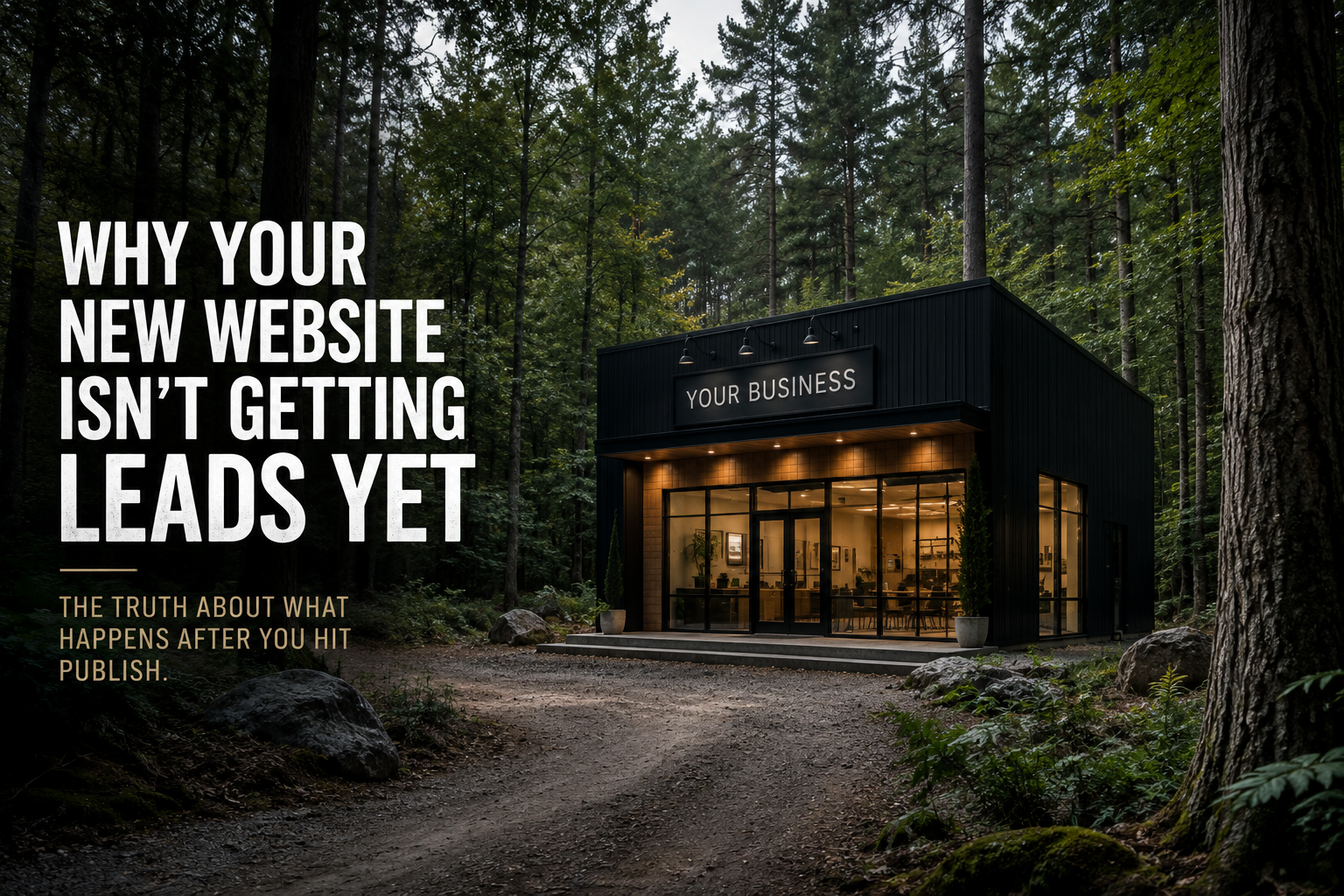
Launching a website without marketing is kind of like opening a beautiful store in the middle of the woods and expecting customers to somehow find it.
People can’t do business with you if they don’t know you exist.
Your website isn’t the finish line — it’s the foundation.
One of the biggest misconceptions we see is the belief that a new website automatically creates traffic, phone calls, and sales.
In reality, websites perform best when they’re backed by ongoing visibility, strategy, and optimization.
Here are some of the biggest reasons businesses don’t immediately see leads after launching a new website:
1. Nobody Knows Your Website Exists Yet
This is by far the most common issue.
A new website has no authority with search engines yet. Google doesn’t instantly push brand-new websites to the top of search results. It takes time, content, backlinks, optimization, and consistency for search engines to begin trusting and promoting your site.
Without active marketing efforts like:
- SEO
- Google Ads
- Social media campaigns
- Email marketing
- Video content
- Local search optimization
…your website is basically sitting online waiting to be discovered.
Websites need traffic generation after launch — not just before launch.
2. A Website Is Not a “Set It and Forget It” Tool
A lot of businesses still treat websites like printed brochures.
But the internet changes constantly.
Search algorithms evolve. Competitors update their content. Consumer behavior shifts. AI search tools are changing how people find businesses online.
If your website stays exactly the same month after month, it can slowly lose visibility and relevance.
The websites that perform best are living marketing tools that require:
- Fresh content
- SEO updates
- Performance improvements
- Landing page testing
- Blog publishing
- Updated photos and videos
- New offers and calls-to-action
A stagnant website rarely becomes a lead-generating machine.
3. Traffic Doesn’t Automatically Mean Conversions
Sometimes businesses are getting website traffic — but still not getting leads.
That’s because traffic alone isn’t enough.
Your website also has to:
- Build trust quickly
- Clearly explain what you do
- Show why you’re different
- Guide visitors toward action
- Make contacting you easy
If people land on your site and feel confused, overwhelmed, or uncertain, they leave.
4. Your Messaging May Sound Like Everyone Else
A lot of websites say the same things:
“We provide quality service.”
“We care about our customers.”
“We are committed to excellence.”
That kind of language doesn’t separate your business from competitors.
People decide within seconds whether your business feels relevant to them. Your website should immediately answer:
- What do you do?
- Who do you help?
- Why should someone choose you?
- What should they do next?
Clear messaging converts better than vague marketing language every time.
5. Your Website Might Not Work Well on Mobile
Most website traffic today happens on phones.
If your website:
- Loads slowly
- Has tiny text
- Feels cluttered
- Is difficult to navigate
- Has forms that are annoying to fill out
…people leave quickly.
A website can look amazing on desktop and still perform terribly on mobile — and that absolutely impacts lead generation.
6. There Are No Trust Signals
People are skeptical online.
Before someone contacts a company, they want reassurance that the business is legitimate and trustworthy.
Strong websites include things like:
- Reviews
- Testimonials
- Case studies
- Before-and-after examples
- Real photos
- Certifications
- Client logos
- Clear contact information
Without trust signals, people hesitate.
And hesitation usually means they leave.
7. Your Calls-to-Action Aren’t Strong Enough
A surprising number of websites never clearly tell visitors what to do next.
“Learn More” usually isn’t enough.
People respond better to direct actions like:
- Schedule a Consultation
- Request a Free Quote
- Book an Appointment
- Call Now
- Get a Marketing Audit
Your website should guide visitors — not make them figure it out themselves.
8. SEO Takes Time
This is one of the hardest things for businesses to hear:
SEO is not instant.
Even with a well-built website, it often takes months of:
- Content creation
- Keyword optimization
- Technical improvements
- Link building
- Local SEO work
- User engagement
…before strong organic traffic starts building.
The businesses that win online are usually the ones that stay consistent the longest.
9. Your Website Was Designed to Look Good — Not Convert
There’s a big difference between a beautiful website and a strategic website.
A lot of websites are built like digital brochures instead of lead-generation systems.
A high-performing website should intentionally guide visitors through a process:
- Grab attention
- Build trust
- Solve a problem
- Create urgency
- Make action easy
Design matters. But strategy matters more.
The Bottom Line
A website isn’t magic.
It’s a tool.
And like any tool, the results depend on how it’s used, maintained, promoted, and improved over time.
The businesses consistently generating leads online are usually doing multiple things at once:
- Running traffic campaigns
- Improving SEO
- Publishing fresh content
- Updating their website regularly
- Monitoring analytics
- Testing conversion strategies
- Building trust online
At River City Advertising, we help businesses in Richmond and beyond turn websites into active marketing systems — not just online placeholders.
Because launching the website is only the beginning.